Contact & account enrichment
Navigate procurement with Starbridge
See how each buyer purchases, find the right procurement path, and access pre-competed contract vehicles to close deals faster.
Winning the buyer is not the final step in a public sector deal. Procurement can add months after the decision is made, or push a won deal back into a competitive process. Starbridge helps your reps navigate procurement by showing how each buyer actually purchases, then giving them a compliant path to transact when that buyer is ready to move.
See how each buyer purchases
Most reps enter procurement conversations without knowing what the buyer is allowed to do. Sole source thresholds are set by each agency's procurement code, so one city may allow a direct award at $50,000 while the county next door caps it at $25,000. Price a deal without being aware of the sole source threshold, and you can trigger an RFP nobody wants.
With Starbridge, you can:
- Open Navigate Procurement from any Buyer Page to see that buyer's sole source threshold before you price the deal
- Review how the buyer has handled sole source exceptions in the past, not just what the policy says
- See which cooperative contracts they use and which resellers they already buy through
Zencity's enterprise reps use Starbridge to walk into every first discovery call already knowing procurement pathways, past contracts, and the right talk track, and half of their cold meetings now come from Starbridge.

Procurement context inside your CRM
Procurement intelligence only changes rep behavior when it appears where reps already work. Context that lives in a separate tab gets ignored at the exact moment it matters, when the deal moves into the procurement stage.
With Starbridge, you can:
- Sync sole source thresholds, cooperative contract history, and reseller relationships to tools like Salesforce or HubSpot
- Give reps procurement context on the account record while they are actively working the opportunity
- Keep that context current as thresholds change and buyers enroll in new vehicles
Your reps plan for procurement while the deal is live instead of researching it after the buyer says yes.

Access to major contract vehicles
Knowing the best purchasing path only helps if your product is actually available on it. A buyer who is ready to purchase through a cooperative contract still has to run a bid if you are not having access to a contract vehicle.
With Starbridge, you can:
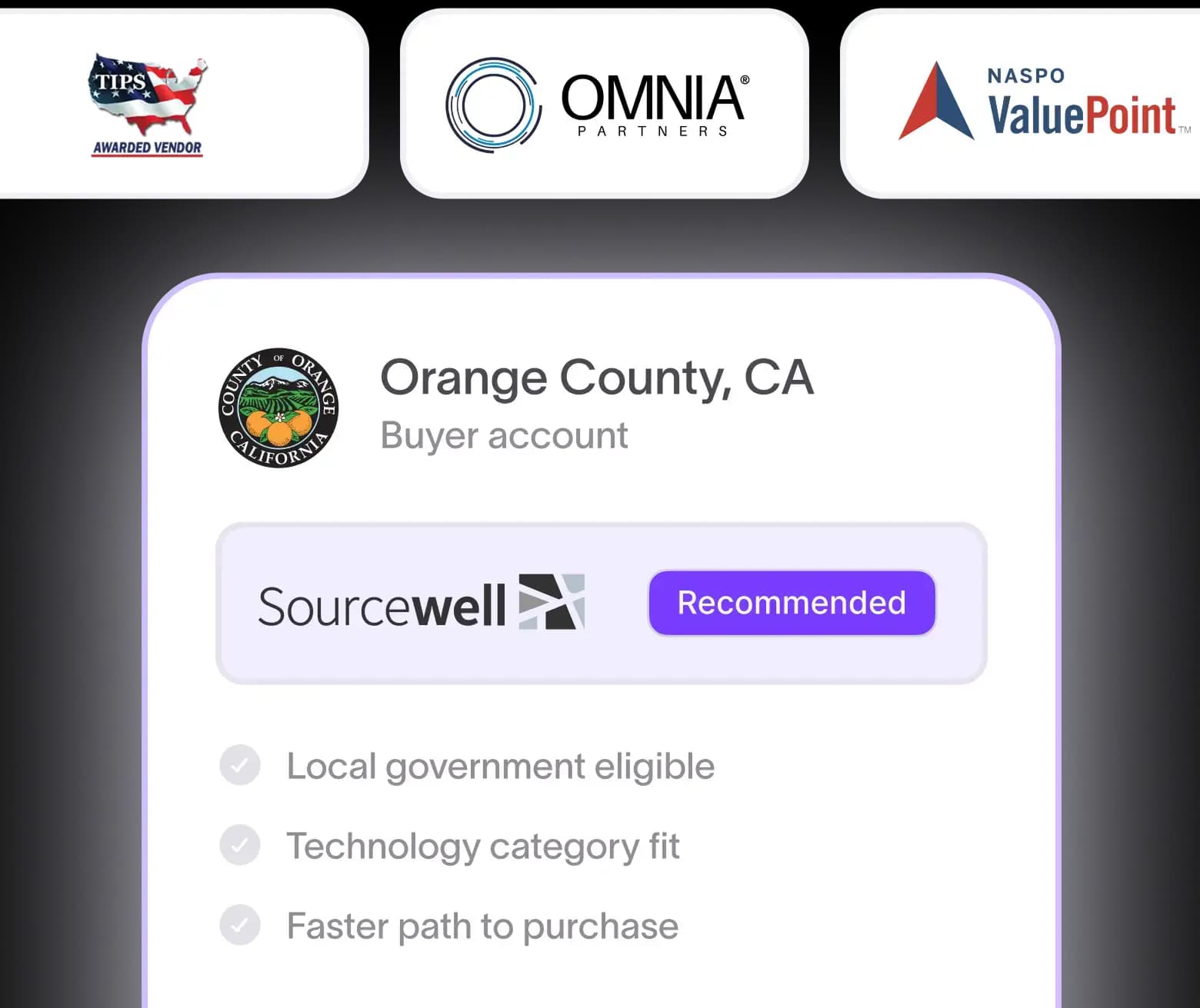
- Sell through major contract vehicles including OMNIA Partners, Sourcewell, TIPS, Texas DIR, and GSA
- Cover these major vehicles through a single onboarding instead of a separate application for each
- Leave compliance, paperwork, and renewals to Starbridge
Each vehicle still reviews, lists, and authorizes your product on its own schedule, and coverage applies to technology offerings. The path is open and managed for you, so when the buyer is ready to purchase, you already have a compliant route in place.
Support on live deals
The first deal through an unfamiliar purchasing path is where most teams lose weeks. Quotes get rewritten, paperwork bounces, and the buyer's procurement office asks for documents nobody on your side has ever produced.
With Starbridge, you can:
- Work directly with the Starbridge team to identify the fastest compliant path for that specific deal
- Move through quoting and the buyer's procurement process without rebuilding it from scratch
- Resolve blockers as they come up rather than after the deal has already stalled
You get a team that has run this process before, working the deal in front of you right now.
No upfront cost, no minimum volume
Access to contract vehicles has traditionally come with a size requirement. Resellers earn a percentage of the contract, so they focus on large deals and rarely engage a vendor without a six-figure opportunity already in hand. That leaves smaller and earlier-stage vendors without a practical purchasing path.
With Starbridge, you can:
- Get started with no upfront onboarding cost and no minimum volume commitment
- Keep control of the customer relationship, your pricing, and your sales process
- Let Starbridge handle the quote, the contract vehicle, and the procurement process when it is time to transact
Instead of spending months figuring out procurement after you have won the deal, you plan for it from the first conversation and carry the opportunity all the way through purchase.
Ready to give your team real leverage? Book a demo to see procurement navigation in action.
Frequently asked questions
Customer testimonials
What teams say after switching to Starbridge.