
Starbridge vs BidNet Direct: where each one sits in a public sector deal
BidNet Direct alerts you when a bid posts. Starbridge finds the deal earlier, in board minutes, budgets and contract end dates. Here is when to use each.

Teams comparing Starbridge and BidNet Direct expect to pick one. However, each platform sits at a different point in the same deal, so choosing between them may not be the right call.
BidNet Direct, part of SOVRA, is a bid board and submission portal. Agencies post bids there and vendors compete for them.
Starbridge covers the work around that bid: finding the account, reading the buyer, writing to them, scoring the bid when it posts, and then selling on the route the buyer prefers to use.
This comparison covers what each one tells you at each stage of a deal, from the first signal to the purchase itself.
| Capability | Starbridge | BidNet Direct |
|---|---|---|
| When you hear about a deal | Reads the public record across more than 320,000 government and education bodies, so board minutes, budgets, grants and contract end dates arrive on their own published schedule, ahead of any bid built on them. | Agencies publish the bid notice and the vendors who signed up are alerted, which starts once the spec is written. |
| What arrives with the bid notice | The account record behind the signal: verified contacts, what the buyer spends in the category, the vendor in place and the date that contract ends. Purchase orders are there for 77% of institutions out of the box. | The bid documents, a plan holder list naming the vendors who downloaded them, and an archive of past bids that shows how a buyer has bought before. |
| Reaching the buyer | Sequences draft the run of emails to a named contact from the signal and the account’s own record. | Messages travel from the agency outward, so a vendor’s first contact with a buyer is usually the bid itself. |
| Deciding which bids to answer | Each bid is scored against what you sell, with the reasoning for the match attached to it. | Vendors pick the work they sell and where they sell it, and alerts follow what they picked. |
| Working the bid once it posts | Drafts the response against the spec and what the account has bought before. | Hosts the posted bid, its changes, alerts when a watched competitor downloads it, and the route the finished bid goes back through. Signing up is free at the base tier. |
| How the deal transacts | Vehicles including NASPO ValuePoint, OMNIA Partners and TIPS, with the paperwork and quoting run through Starbridge. | The route a public bid travels, from the day it posts to the award. |
When each tool tells you about a deal
Starbridge and BidNet Direct tell you about a potential deal at different points of the sales cycle.
BidNet Direct
BidNet Direct is traditionally used for sending out bid notices to vendors who sign up. Agencies post there, vendors register, and alerts go out as bids and changes appear.
One G2 reviewer in education management notes that “Sometimes it is delayed a few days from release. That can cause a rushed environment.” A short window leaves less room to shape anything, because the spec is already written by the time a notice appears.
Starbridge
Starbridge reads the public record across more than 320,000 government and education bodies. Each record appears on its own published schedule, often months before a bid posts.
Each kind of record marks a different point on the way to a purchase:
| What the record is | What it tells you |
|---|---|
| Board minutes | The need has been raised out loud |
| Budget documents | The money is set aside |
| Grant awards | Outside funding has landed |
| Contract end dates | A rebid is due |
The top row (board minutes) is the earliest of these ‘buying signals’. For example, a board minute can appear months before the bid it leads to, while a contract end date can go on the calendar the day it is found.
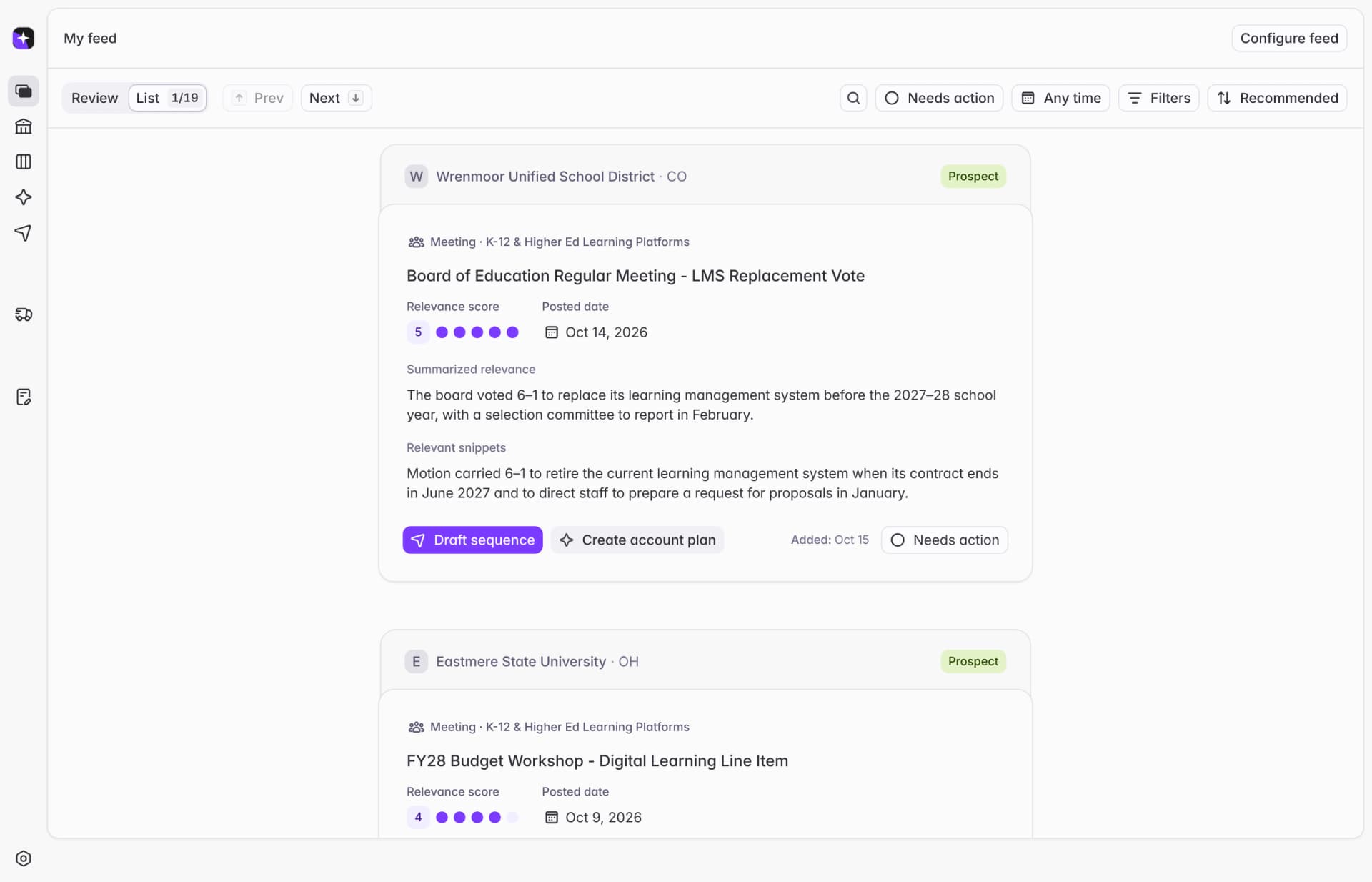
Engaging with the potential buyers using these ‘buying signals’ often helps a vendor get a head start in the sales process. A seller can answer questions, share what other buyers did, and become known to the people who will ultimately write the spec.
Bottom line
A published bid is the end of a buyer’s decision. However, a board minute is the start of one.
It’s worth keeping track of these public documents so you can engage buyers early.
The stretch between a board minute and the bid is the only time a seller can shape what the bid ends up asking for. Starbridge works inside that stretch, and BidNet Direct starts at the end of it.
What each tool gives you alongside the bid notice
A notice tells you a bid exists. Working it often takes more than that.
BidNet Direct
BidNet Direct also offers a plan holder list, which names the vendors who downloaded a given bid.
So a vendor can see who else is looking at the same bid. BidNet Direct also keeps an archive of past solicitations, which is a real way to read how a buyer has bought before.
Starbridge
Starbridge attaches the account to the signal. So a rep opens one record and sees:
- Verified contacts at the buyer
- What the buyer already spends in your category
- Which vendor it uses now
- When that contract runs out
- When the board approved it
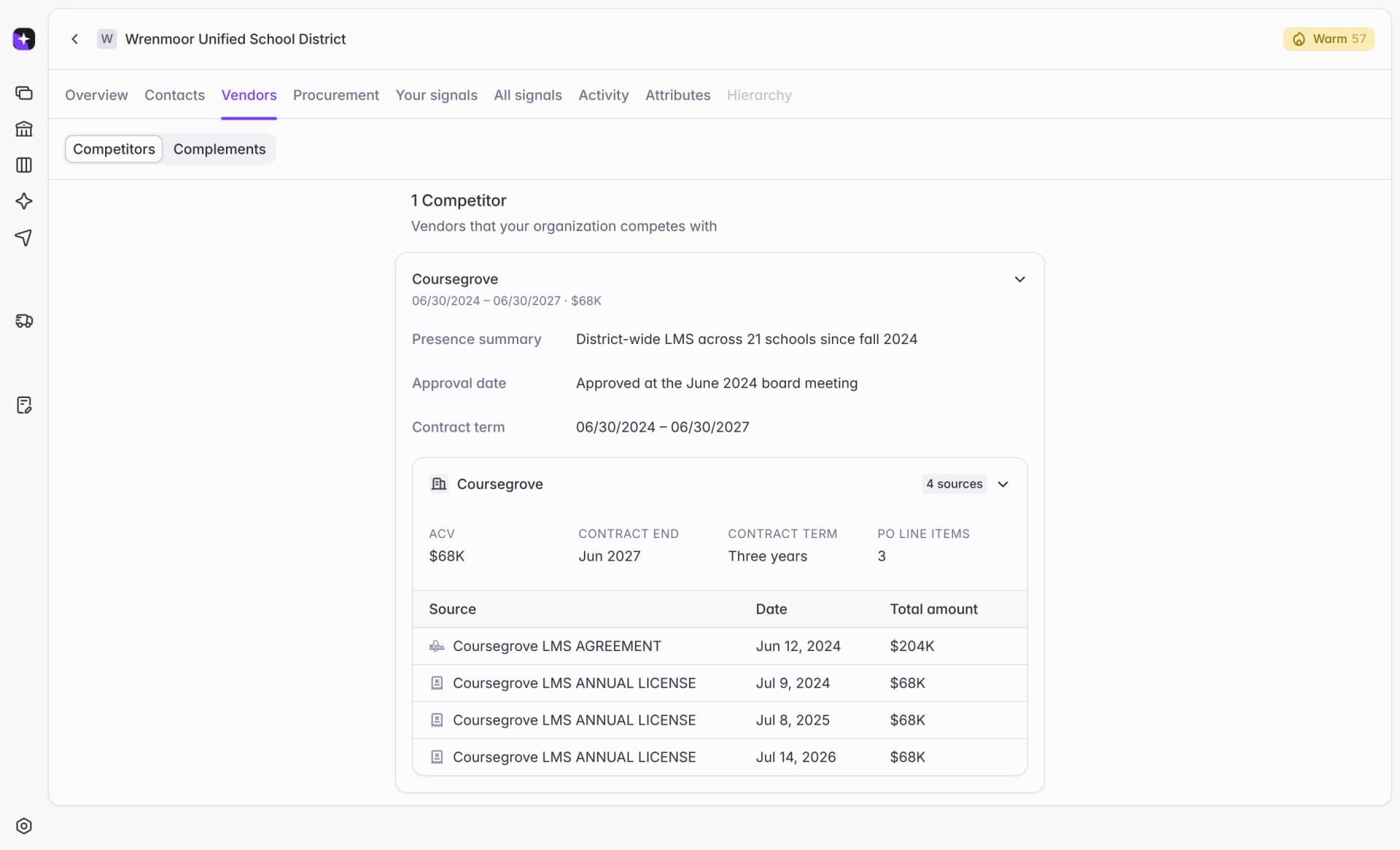
Our public spend data guide covers where those records live. Public Spend Intelligence draws on purchase orders for 77% of institutions out of the box, across state and local government, K-12 and higher education.
Bottom line
The archive and the plan holder list tell you about the bid. Purchase orders, named contacts and a contract end date tell you about the buyer who posted it.
Starbridge offers more data to put the bid in context, which helps sellers have more effective conversations with potential buyers.
Reaching the buyer
A rep still has to write to a named contact at the account, even when the record already shows it moving toward a purchase.
BidNet Direct
The messages travel from the agency outward. Agencies post, vendors are alerted, and so the portal tends to be more focused on how a buyer reaches the market, rather than how a seller reaches a buyer.
That direction is what a bid board is for, and it works. This focus on the buyer may also mean that the first thing a buyer learns about a vendor is usually a bid.
Starbridge
The first message can name the need the board actually discussed, because Starbridge drafts the whole run of emails to the contact from the signal and the account’s own record.
A rep writing from Starbridge has all the information in front of them:
- The signal, with the document behind it
- A verified contact and their role
- What the buyer spends in the category
- The date the current contract ends
Our trigger-based outbound guide covers running these across a territory. How to personalize B2G outbound covers the work behind one message.
Bottom line
A bid board tells every registered vendor the same thing on the same day. An email written from the account’s record arrives before that, and it is about them.
Deciding which bids are worth your time
Most teams see more public bids than they can answer, so often what you rule out matters more than what you get.
BidNet Direct
Vendors sign up for the kinds of work they sell, and alerts follow what they picked. So a vendor keeps the bid board short by narrowing it to one kind of work and one region.
Starbridge
Starbridge scores each bid against what you actually sell and says why it matched. So a rep reads the reason rather than the keyword, which makes a weak match quick to dismiss.
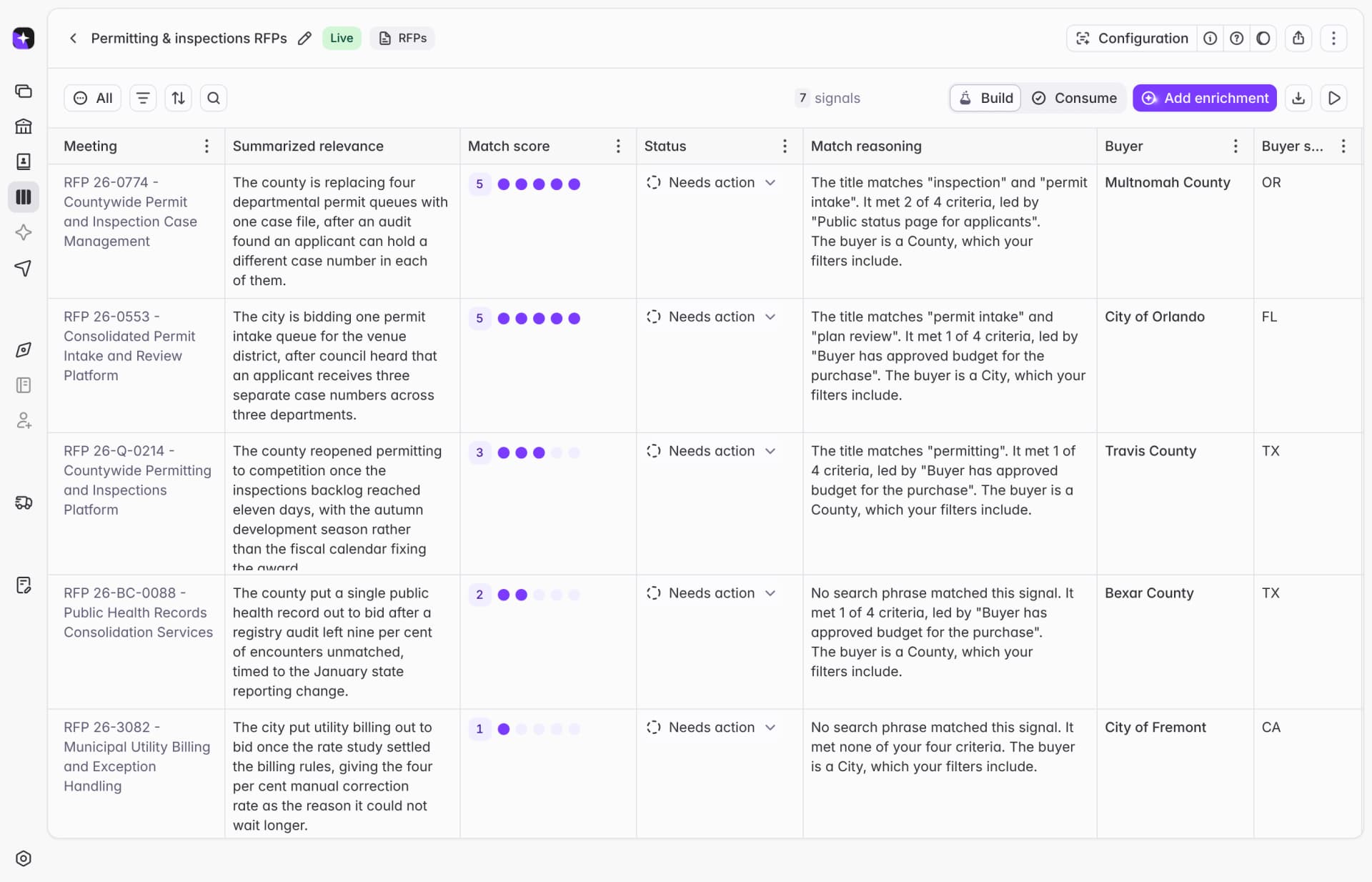
Bottom line
Category filters answer whether a bid is in your field. However, a score with its reasoning attached answers whether it is worth your week.
Working the bid once it posts
After a bid posts, the two products cover opposite halves of the same step: the agency’s portal carries the posted bid and its changes, and Starbridge drafts what you send back. Running both covers the whole process.
BidNet Direct
BidNet Direct covers the posted bid itself. Vendor registration is free at the base tier, and a premium tier widens the coverage.
It also carries:
- Changes and updates to a posted bid
- Alerts when a watched competitor downloads it
- The route the finished bid goes back through
Updates to a live bid matter more than they sound. For example, a change posted late can alter what you have to write.
Starbridge
Starbridge drafts a response against the spec and what the account has bought before. So a rep starts from a draft that already knows the buyer rather than from an empty page.
The AI RFP Finder & Proposal Writer keeps the draft, the requirements and the review in one place, next to the bid itself.
Alongside the draft, it also gives you:
- Answers filled in from your own product knowledge base
- A checklist of everything the bid asks you to answer
- Comments and tags, so a colleague can fix a section in place
A draft is a starting point rather than a finished bid. So a person still reads it against the spec before anything goes back.
Bottom line
The submission step belongs with the agency’s own portal, and that is usually BidNet Direct. What a seller brings to it is a decision already researched rather than a packet opened cold.
How the deal transacts
A public buyer typically has more than one way to buy. One route is a bid, and another is a purchase through a cooperative contract vehicle.
BidNet Direct
BidNet Direct is the route a public bid travels. An agency publishes, vendors respond, and the award follows the process the agency set out.
Starbridge
Contract vehicles give buyers an alternative to running a bid. Once a contract vehicle is selected, the remaining transaction can move much faster.
Starbridge is a channel partner that provides contract vehicle access, plus the onboarding, quoting and transaction support around it. Starbridge customers transact on vehicles including:
- NASPO ValuePoint
- OMNIA Partners
- TIPS
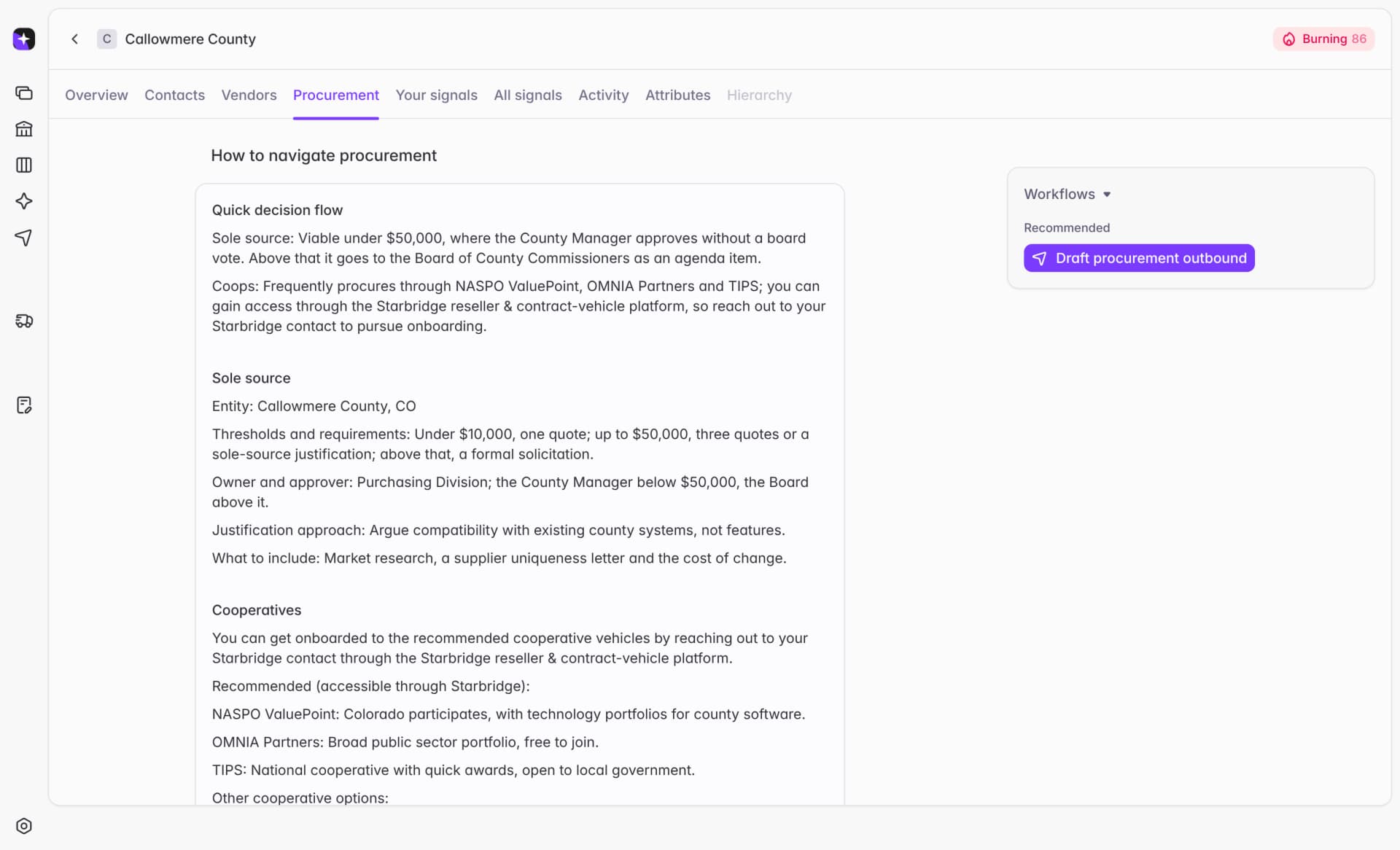
Access here means a vendor of any size can sell through these vehicles, and Starbridge runs the paperwork.
The cooperative still runs its own review on its own clock, covering the listing, the price and the authorization. The route is quicker than a bid, though not immediate.
There is no exclusivity either. Starbridge can sit alongside a channel you already use.
Bottom line
Most public purchases still go to bid, and a portal carries those. However, for the rest the question worth asking is which route this buyer already uses to procure goods and services.
That answer decides whether you write a response or a quote.
Using both together
No single capability decides between them. Using Starbridge and BidNet Direct together allows sellers to cover all stages of the deal.
| Stage of the deal | The signal | What you do with it |
|---|---|---|
| Before a bid exists | Board minutes, budgets, contract end dates | Pick the accounts worth a conversation |
| Before a bid exists | A verified contact and the record behind it | Write to them first |
| A bid is posted | The agency’s own alert | Decide whether to answer it |
| While you write | Changes and answers to other vendors | Adjust what you write |
| At the purchase | The buyer’s own purchasing route | Bid, or quote on a vehicle |
| After the award | Purchase orders and the new contract’s dates | Set the date you come back |
A team using only the posted feed starts every deal at the same moment as everyone else on the plan holder list. However, a team that reads the record first reaches the buyer earlier.
So by the time the bid posts, that buyer already knows the team.
That’s one of the reasons we created Starbridge.
Starbridge is the AI GTM platform for companies selling to the government, K-12, and higher education, helping teams prioritize the right accounts, engage the right people earlier, and identify high-intent opportunities before the competition.
InquirED drove $200K in new pipeline in its first quarter with Starbridge, automating its manual account research.
Book a demo today to see which accounts in your market are already spending in your field.
Starbridge or BidNet Direct: which should you choose?
We recommend keeping the portal your agencies publish to, which may or may not be BidNet Direct. Then decide separately how much of the motion around it you want to run yourself.
- Stay with BidNet Direct alone when answering published bids in your region is the whole motion, and the categories you sell into are well covered there.
- Add Starbridge and run both when you sell across several states, or want the months before a bid posts, the buyer research behind it, the outreach that follows, and help scoring and answering the bid once it lands, without giving up the portal agencies post to.
If you are weighing a wider set of tools rather than this pair, the RFP finder comparison covers five of them, and the BidNet Direct alternatives guide ranks four. This page covers just the two-product decision.
Frequently asked questions
Not usually. Many agencies publish and take bids through BidNet Direct, so a vendor selling into those agencies has reason to stay registered. Starbridge covers the motion around that bid, from the months before a solicitation exists through to the purchasing route at the end. Many sales teams run both rather than choosing.
The account behind the opportunity. Verified contacts at the buyer, what it already spends in your category, which vendor it uses now and when that contract ends. A notification tells you a bid is open, while the account record tells you whether it is worth answering.
Vendor registration is free at the base tier, with a paid premium tier for wider coverage. Because the pricing models are different in kind, cost is not a clean comparison between the two. The practical question is what each one is for.
Sometimes. Cooperative contract vehicles are already competitively bid on the buyer’s side, so a buyer with access to one can purchase through it rather than running a new solicitation. Thresholds and approvals still apply, and most purchases above them still go to bid.
Often months before a bid posts, because the discussion usually happens in public first. Board agendas, budget documents and grant awards all appear on a published schedule. Talking to government buyers before the RFP covers which conversations are open to you in that window.
No, because they answer different questions. Starbridge decides which accounts deserve attention and prepares the approach, and the agency’s portal handles the posting and the submission. Reps work a shorter list, and the bids they answer are ones they chose on purpose.


