Contact & account enrichment
Find education decision makers
Finding K-12 decision makers is hard. Starbridge delivers verified education contacts with 98% accurate emails, direct dials, and CRM-ready enrichment.
Contacts built for education
Generic B2B contact data is built for corporate buyers. Education is a different problem. School districts don't follow standard title conventions, universities have purchasing roles spread across dozens of departments, and LinkedIn barely covers either. Starbridge's Contacts & Company Data capability is built specifically for K-12 and higher ed, crawling live from education sources rather than static snapshots that refresh quarterly.
With Starbridge, you can:
- Create a contacts bridge that continuously discovers and verifies contacts matching the titles you define
- Configure title targeting for CIOs, IT Directors, Superintendents, or any combination, with automatic mapping of common title variations across districts and institutions
- Pull contacts live from university directories, district department pages, staff listings, and .edu sites
Starbridge fact-checks every record against live sources, achieving 98% email accuracy on a test of 14,000 records, compared to 60–70% from generic databases. Your team's outreach lands instead of bouncing.
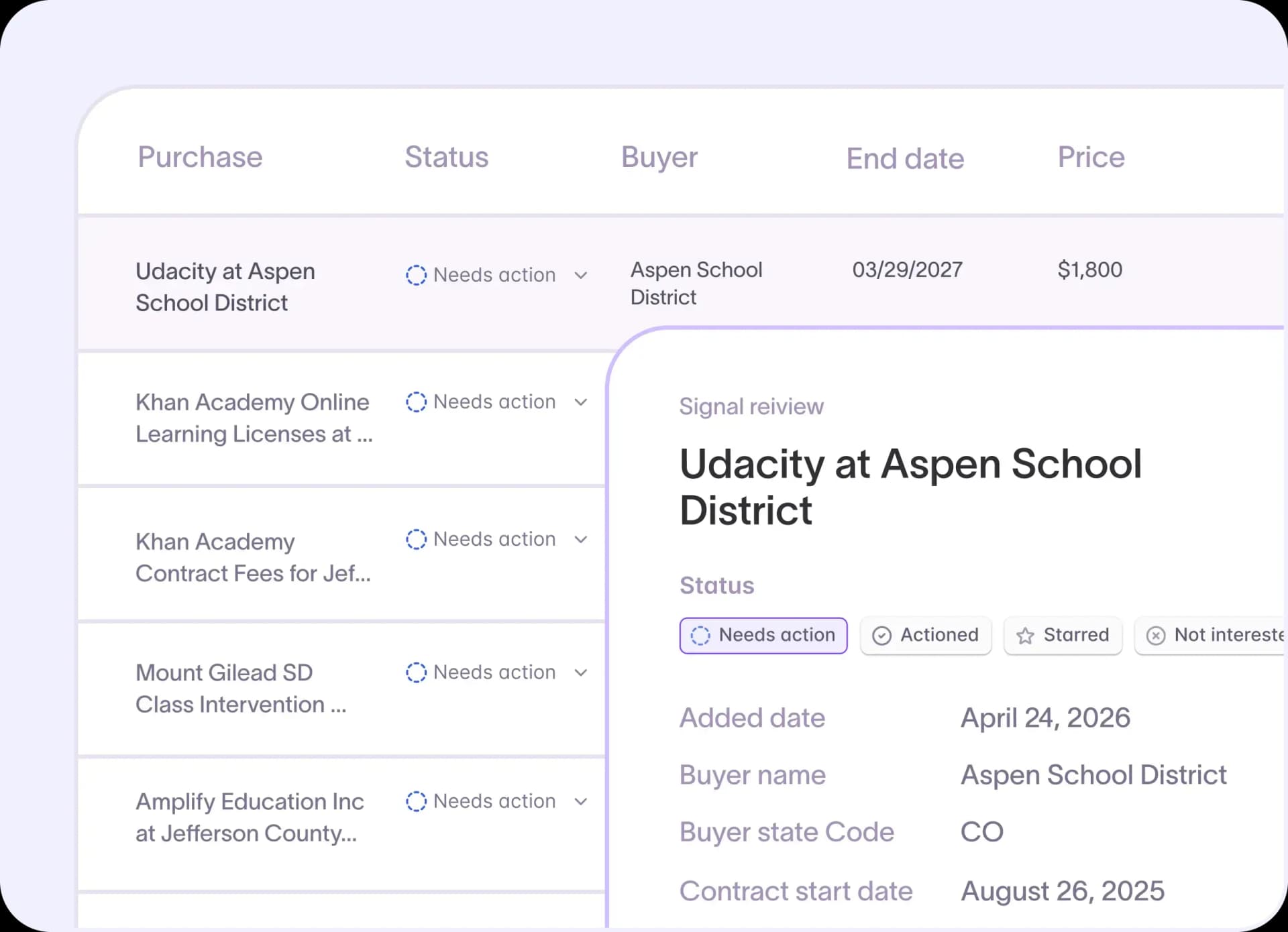
Account filtering and dynamic buyer lists
Not every school district or university should be on your call list. A district with 500 students doesn't buy the same products as one with 50,000, and ICP fit depends on enrollment size, grade configuration, growth trajectory, and buyer type. Without filtering, reps spend outreach capacity on accounts that will never convert.
With Starbridge, you can:
- Filter target accounts by buyer type, including K-12 districts, community colleges, and four-year universities
- Refine your account set by enrollment size, enrollment trend, or other attributes that match your ICP
- Use a dynamic buyer list that updates automatically as new districts and institutions meet your criteria
Your team always works from a current, qualified account list without manually rebuilding it each quarter.
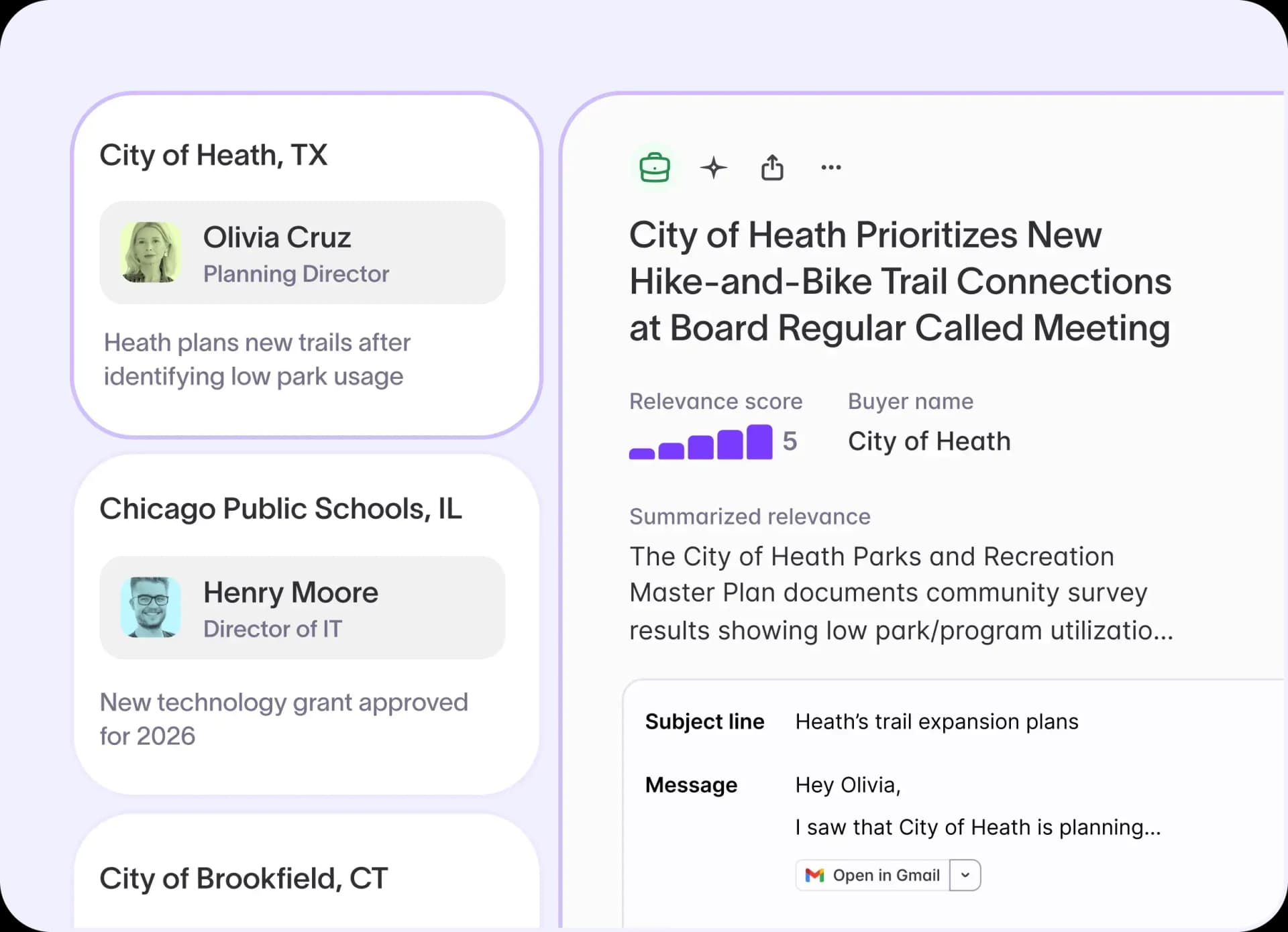
Contact profiles with relevance context
A name and an email address is not the whole picture. Without context, reps don't know whether they're reaching the actual decision maker, who else is involved in the purchase, or why this contact matters for their specific product. Blind outreach is inefficient and often reaches the wrong person.
With Starbridge, you can:
- Surface each contact's name, title, verified email, and direct phone number
- Review a relevance explanation for why each contact was selected for your criteria
- Identify the primary decision maker before reaching out, not after
TAM to Target reports Starbridge contact data is 3–4x more valid than other vendors. Their team no longer manually verifies data before running campaigns.
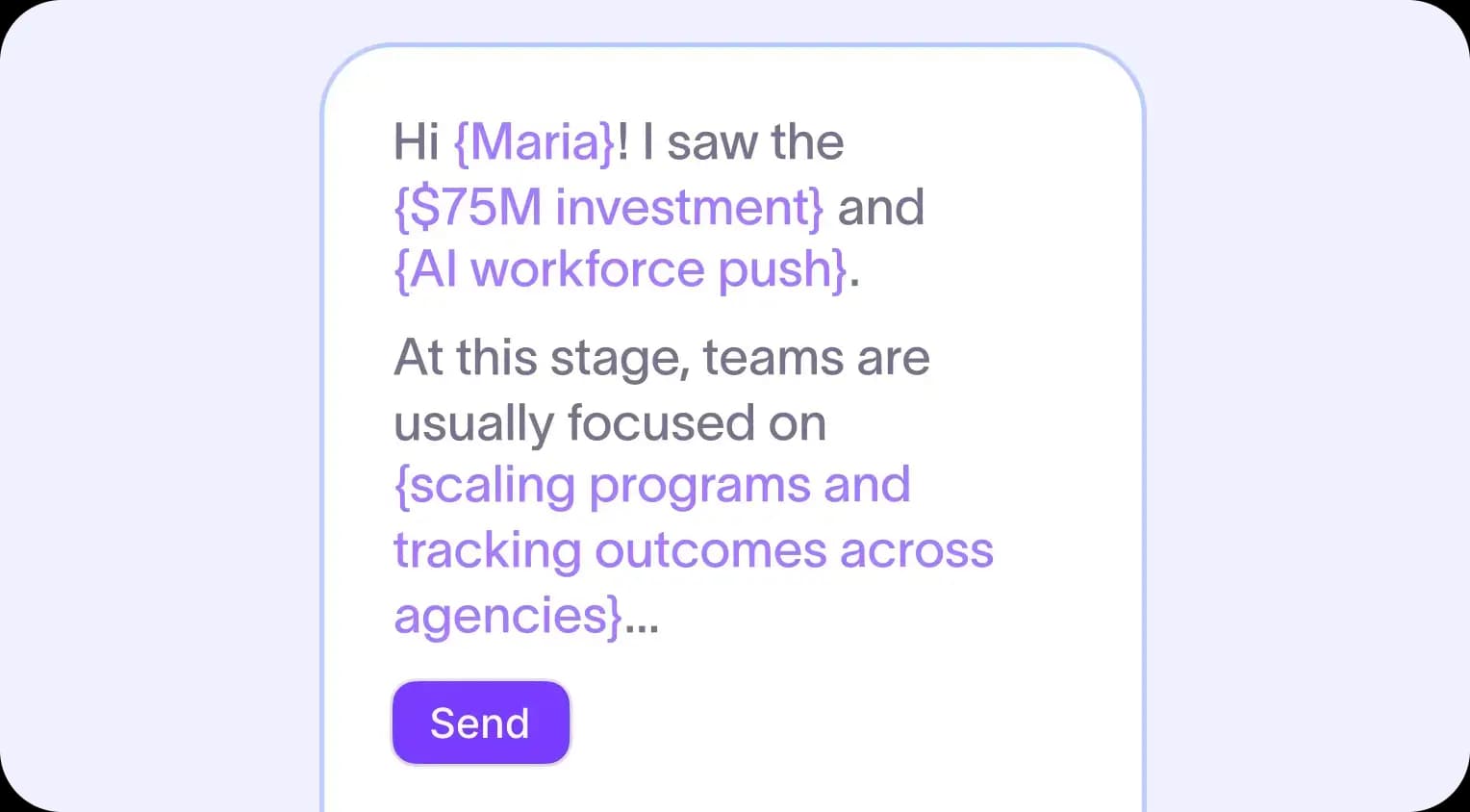
CRM sync and personalized outreach
Finding the right contact is only half the work. If syncing to your CRM requires manual export and import, or if outreach must be written from scratch for every contact, your team's weekly volume remains low. Without buying signals linked to each contact, outreach remains generic.
With Starbridge, you can:
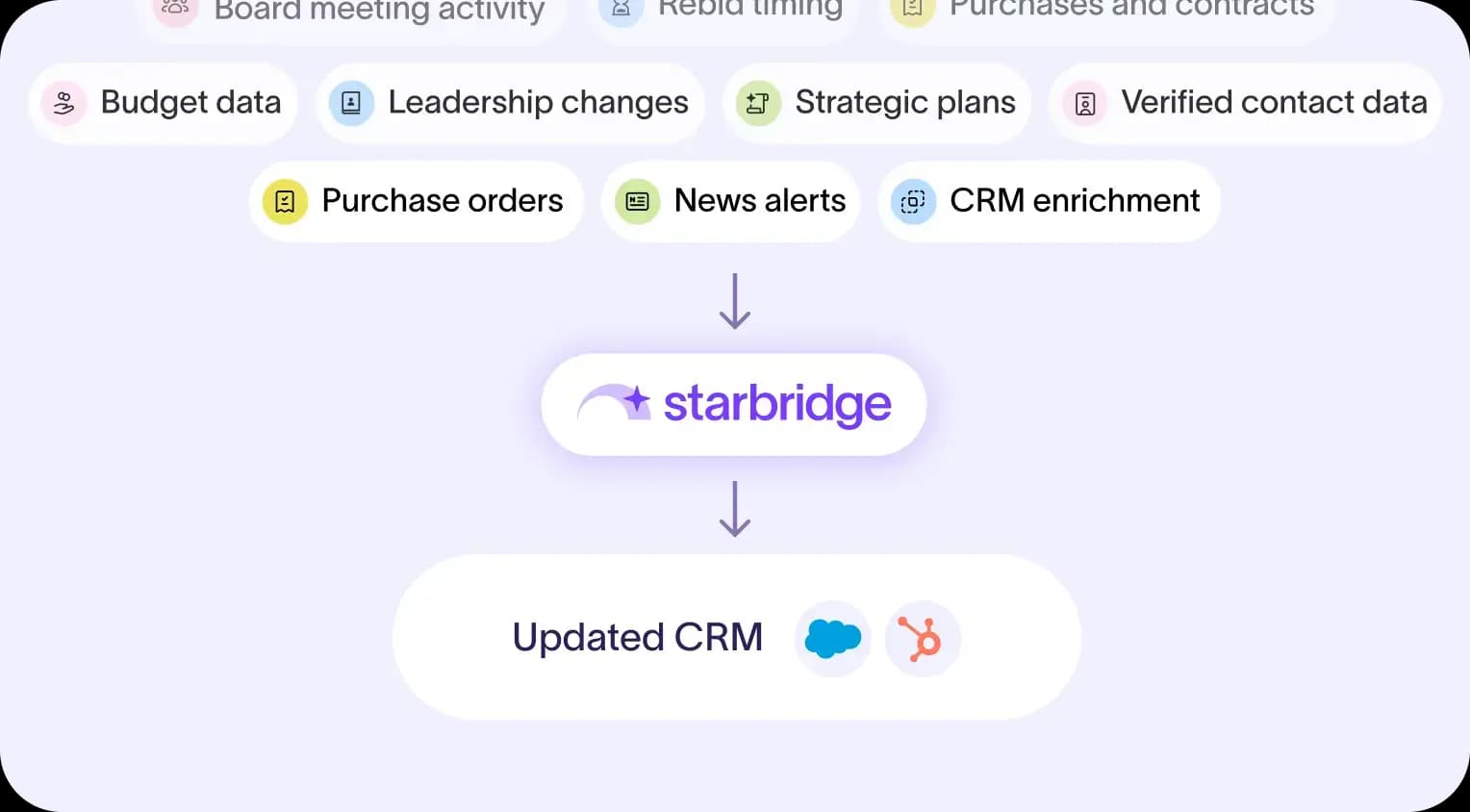
- Push verified contacts directly to Salesforce or HubSpot from the same workflow that found them
- Generate personalized outreach referencing live buying signals for each contact, including budget discussions, board meeting activity, and other district-level indicators
- Keep your CRM current with verified, education-specific contact data without manual enrichment cycles
Your reps go from contact discovery to first touchpoint in one workflow, without switching tools or exporting lists.
Champion tracking and continuous coverage
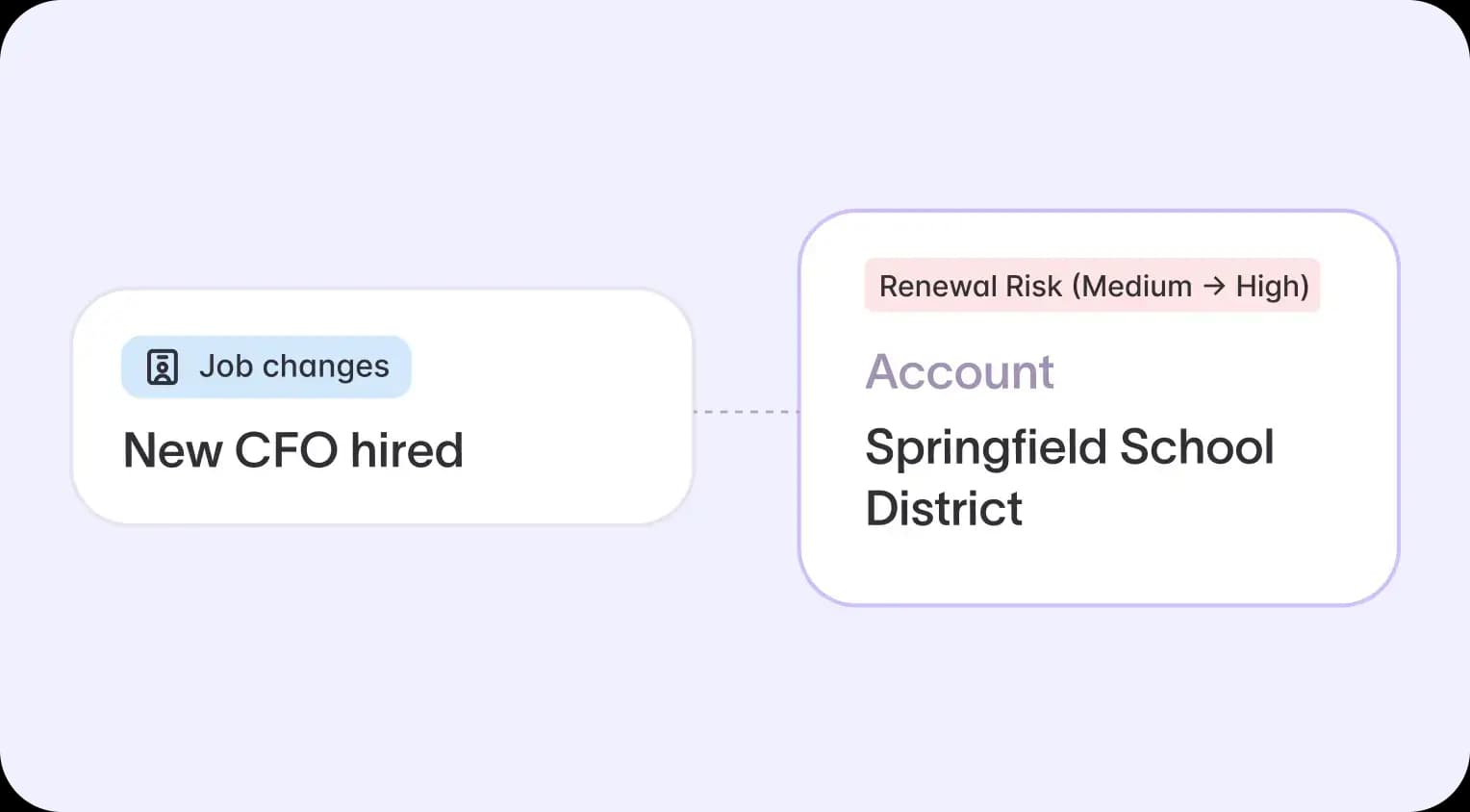
Education contact data goes stale fast. Administrators move between districts, take on new roles, and leave positions, sometimes several times a year. A champion you built a relationship with at one district may be the decision maker at a different organization by the next quarter. If your contact data doesn't follow those moves, you're missing warm entries into new accounts.
With Starbridge, you can:
- Track champion job changes and get notified when a contact moves to a new role or organization
- Monitor district and university activity over time to surface new buying signals
- Continuously surface new contacts as organizations evolve and personnel shifts create new decision makers
Motimatic tripled their average contract value by tracking job changes with Starbridge, identifying when new decision makers entered roles at districts and campuses already in their pipeline.
Ready to give your team real leverage? Book a demo to see how Starbridge finds education decision makers in action.
Frequently asked questions
Customer testimonials
What teams say after switching to Starbridge.