
Hey! I’m Justin 👋
I founded Starbridge to help businesses win more government and education deals.
Welcome to the SLED Sales Brief. A newsletter for gov & edu sales leaders.
At my last company, we had a 10+ team of SDRs that would each draft & deliver their own sequences. I thought that was the way things had to be done.
That is until I met Henry, our head of Growth. Now, Henry is personally responsible for all our sequences. And sending out just as many as a team of SDRs.
We’re creating a new playbook at Starbridge for outbound sequencing.
Today, I’m sharing our process end-to-end.
Let’s dive in.
1. Identify your key signals & challenges
This is the most critical step.
Start with a hypothesis on what is happening at your ICP’s company or their life that makes them a good fit for your outbound at this particular time.
Build a list of these critical buying signals: a job change, new legislation, budget cut, grant approval, etc.
Once you have a list of signals, identify the key challenge given the signal.
For example, let’s say a new VP Sales comes in. Their top challenge is likely going to involve driving more predictable top of funnel.
Keep track of this hypothesis. If you end up seeing poor results, you can return to this hypothesis and tweak it.
2. Write out your dream copy & tokenize it
What would your outbound sequence say if you had all the time in the world to research everything you could on every recipient?
Write it all out & then identify where you can start to build out custom tokens
This is what one of Henry’s drafts will look like.
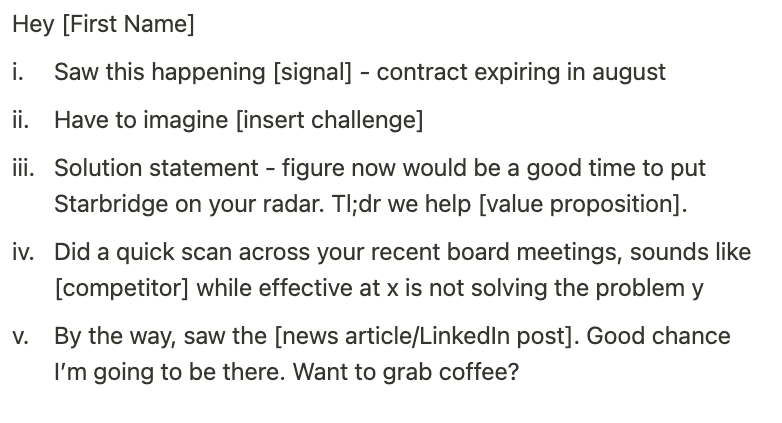
P.S. Our favorite hack here is to use Starbridge’s bridges feature to split out the full email based on a key signal.
3. Have a clear intention for every follow up email
We’ve tested every possible iteration on our sequence structure.
And we feel really good about the one we’ve landed on.
Email one is always some sort of fun idea to catch their eye.
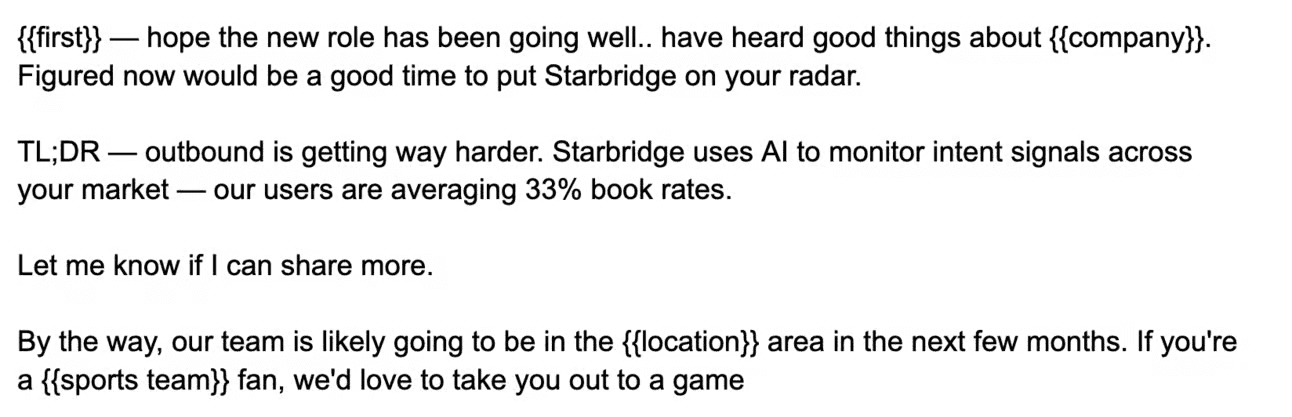
Email two is a specific use case.
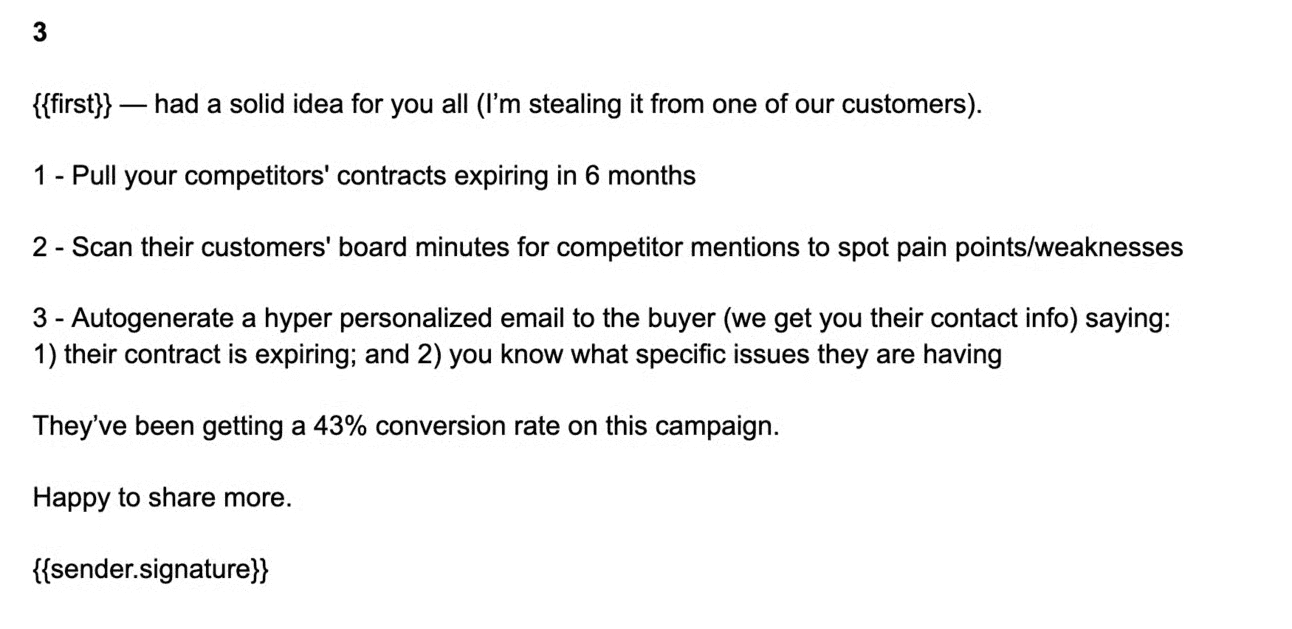
Email three is in case of interest, looping in my colleague. (You don’t actually need to cc them fyi. They’ll just assume it’s a bcc.)

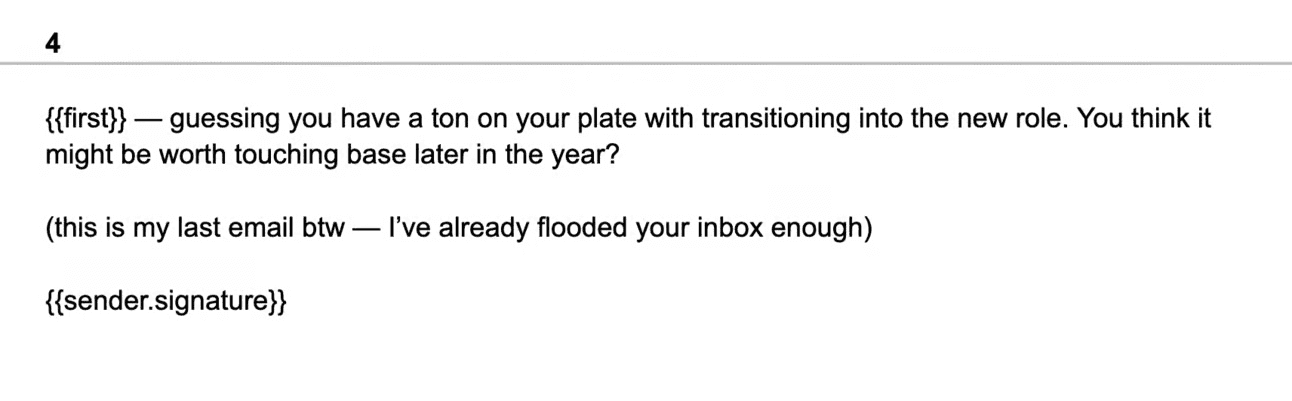
Email four is your typical breakup letter.
4. Track your success from the lens of predictability
With every campaign, you should build a better understanding of expected conversion rates.
We aim to always have 7 evergreen intent signals every month
If you know what volume to expect per signal & your historical conversion rate, you now have a great sense of what to expect moving forward.
Then the game becomes tweaking the amount of investment in each channel depending on performance.
Thanks for reading!
Next week, I’m sharing our predictable revenue playbook. Our 2025 take on Predictable Revenue by Aaron Ross.
If you want to meet up at ASU+GSV btw, reach out via Linkedin. My inbox is always open.
See you next week,
— Justin